Serving NYC restaurants for 50 years!

CALL (917) 341-4117 or EMAIL [email protected]

What Are The Advantages of Using Prefabricated Ducts from Captive Aire in Your NYC Restaurant Kitchen?

Factory-built grease duct can simplify installation, improve system coordination, reduce field welding, and provide a listed ventilation solution for demanding New York City commercial kitchens.
Master Fire Prevention
41 Schermerhorn St, Brooklyn, NY 11201
(917) 341-4117
masterfirepreventionsystem.com
Master Fire Prevention Suppression Systems Testing Inspection Maintenance Brooklyn NYC Quote Hosted Number July 2026
A restaurant preparing a new commercial kitchen in New York City needed a Type I hood exhaust system routed from the cooking line through the building to the exhaust fan. The available mechanical space was limited, and the duct route required several directional changes before reaching the roof. A traditional field-fabricated grease duct installation would have required substantial coordination among the kitchen contractor, duct installer, fire-protection contractor, and other trades. On-site fabrication and welding would also have added another operation inside an already crowded construction schedule.

Planning the Duct Route Before Installation

The project team instead designed the exhaust route around prefabricated factory-built grease duct sections and fittings. The required duct diameters, straight sections, elbows, transitions, access points, supports, and clearances could therefore be considered before the equipment arrived at the restaurant. Once the duct components reached the site, installers could concentrate on assembling the planned system rather than fabricating every section from raw material inside the building. Access doors were incorporated where required for future inspection and cleaning. The round configuration also eliminated the internal corners associated with rectangular ductwork, providing a smoother internal geometry for grease-laden exhaust.

Coordinating the Complete Kitchen Exhaust System

The larger advantage was coordination. The grease duct was treated as part of the complete commercial kitchen ventilation system rather than as an isolated piece of sheet metal connecting a hood to a fan. That allowed the hood, exhaust requirements, duct route, fan connection, fire-protection considerations, and future maintenance access to be evaluated together. For NYC restaurants, this approach can be especially useful when construction schedules are tight or available installation space is limited. Prefabricated duct does not eliminate the need for accurate field measurements, proper engineering, permits, inspections, or code-compliant installation. However, when the application is appropriate, factory-built duct can reduce field fabrication and create a more predictable installation process.
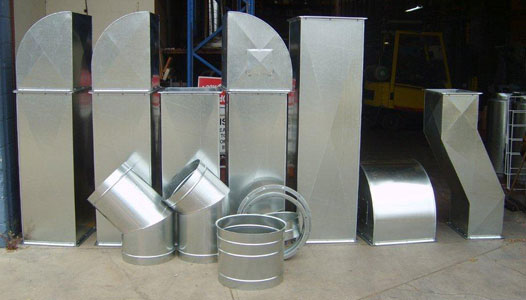
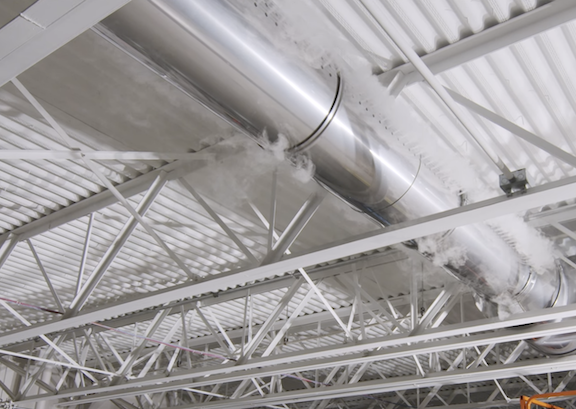
Master Fire Prevention Prefabricated Ductwork By Captive Aire NYC Restaurant Kitchen Ventilation 6
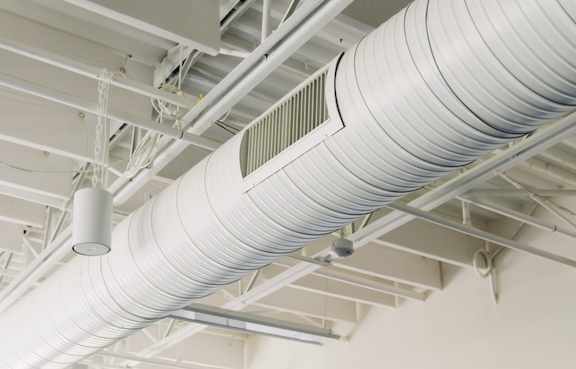
Master Fire Prevention Prefabricated Ductwork By Captive Aire NYC Restaurant Kitchen Ventilation 2
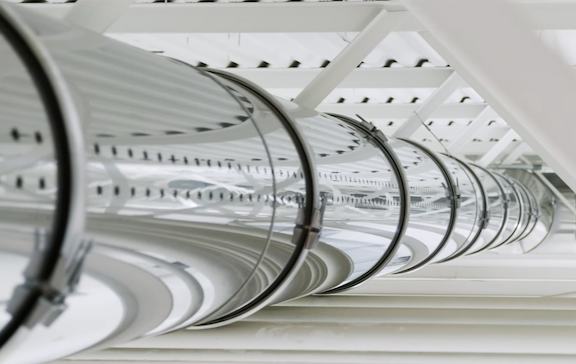
Master Fire Prevention Prefabricated Ductwork By Captive Aire NYC Restaurant Kitchen Ventilation 7
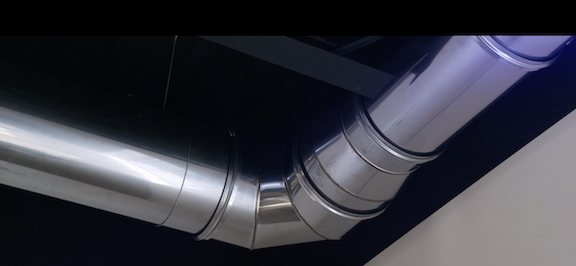
Master Fire Prevention Prefabricated Ductwork By Captive Aire NYC Restaurant Kitchen Ventilation 4
Prefabricated CaptiveAire duct can solve common problems in a New York City restaurant kitchen. Restaurant owners and contractors can plan factory-built parts around the hood, cooking line, exhaust fan and available duct route. That matters in NYC. For example, restaurants often occupy older buildings with tight spaces. Pipes, wires and other equipment may already fill the ceiling. Therefore, running grease duct from a Type I hood to the exhaust fan can become a hard part of the job.

Why Use Prefabricated CaptiveAire Grease Duct?

First, factory-built duct can reduce work at the job site. The parts arrive ready for installers to join them into the planned exhaust system. As a result, crews may need less cutting and field welding. Round duct also offers benefits. Rectangular duct has inside corners where grease can collect. In contrast, round duct removes those corners and creates a smoother path for kitchen exhaust. In addition, the round shape can reduce static pressure. It can also make cleaning easier. CaptiveAire offers single-wall and double-wall grease duct. However, the right type depends on the kitchen, duct route, space and clearance needs. Factory-built parts also make the job easier to plan. For example, contractors can map out straight sections, turns and access points before work starts.

Coordinate the Hood, Duct and Fire Protection System

A restaurant should treat its grease duct as part of the full kitchen exhaust system. First, the hood captures smoke and grease from the cooking equipment. Next, the duct carries that exhaust to the fan. Finally, the fan moves it out of the building. The team must also plan the make-up air, controls and fire suppression system. Therefore, planning these parts together can help the contractor spot problems early. In turn, that can prevent costly changes later. Master Fire Prevention works with restaurant owners and contractors throughout New York City. We help plan commercial kitchen exhaust and fire protection systems. Most importantly, early planning can help avoid duct-route conflicts and other problems at the job site.

What is prefabricated grease duct?

Prefabricated grease duct is manufactured in factory-built sections and fittings for commercial kitchen exhaust applications. Instead of fabricating the entire duct system in the field, installers assemble manufactured components according to the approved system design and installation requirements.

What are the advantages of CaptiveAire factory-built grease duct?

Advantages can include less field fabrication, reduced on-site welding, faster assembly, easier system coordination, round duct geometry, access for cleaning, and compatibility with an integrated commercial kitchen ventilation system.

Does CaptiveAire grease duct require field welding?

CaptiveAire's listed factory-built grease duct is designed so that duct sections can be connected in the field without traditional field welding of every duct joint. Installation must follow the manufacturer's listing, instructions, approved plans, and applicable code requirements.

Why is round grease duct useful in a restaurant kitchen?

Round duct does not have the internal corners found in rectangular ductwork where grease can accumulate. CaptiveAire also identifies reduced static pressure, easier cleaning, improved acoustics, faster installation, and reduced surface area as advantages of its round factory-built ductwork.

Can prefabricated duct be used in an existing NYC restaurant?

It may be suitable for both new construction and retrofit applications. The existing hood, fan, duct route, shaft conditions, structural conditions, clearances, fire protection, roof termination, and applicable NYC requirements should be evaluated before selecting the system.

What is the difference between single-wall and double-wall grease duct?

Single-wall grease duct can be appropriate where the required clearance and surrounding construction allow it. CaptiveAire's double-wall systems incorporate an inner duct, insulation, and an outer wall and include models intended for applications requiring reduced or zero clearance to combustibles, subject to the specific product listing and installation requirements.

Can Master Fire Prevention help with restaurant kitchen duct and fire-system planning?

Yes. Master Fire Prevention works with commercial kitchen ventilation, fire suppression, and related restaurant fire-protection requirements in New York City. The system should be evaluated as a complete installation so the hood, ductwork, exhaust equipment, suppression system, access, and project requirements are properly coordinated.
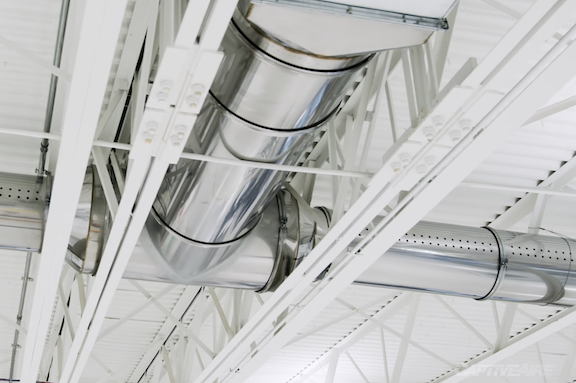
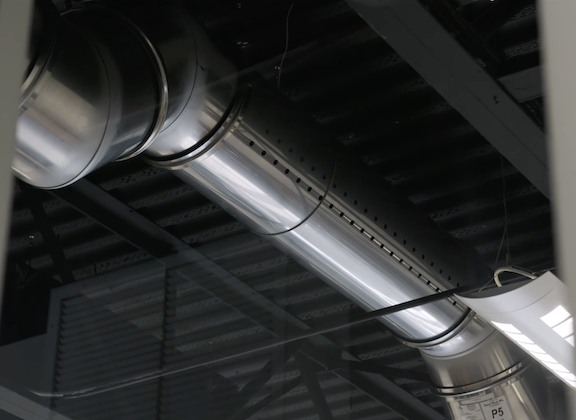
Master Fire Prevention Prefabricated Ductwork By Captive Aire NYC Restaurant Kitchen Ventilation 5
Master Fire Prevention Prefabricated Ductwork By Captive Aire NYC Restaurant Kitchen Ventilation 1
Master Fire Prevention Prefabricated Ductwork By Captive Aire NYC Restaurant Kitchen Ventilation 7

CaptiveAire Prefabricated Grease Duct Advantages

Feature Restaurant Kitchen Advantage
Factory-built sections Reduces the amount of duct fabrication required at the restaurant.
Non-welded field connections Reduces traditional on-site welding of duct joints when installed according to the listed system.
Round duct construction Reduces internal corners where grease can accumulate and can reduce static pressure.
Single-wall and double-wall options Provides configurations for different space and clearance requirements.
Access doors Provides access points for inspection and grease-duct cleaning.
Integrated system capability Allows ductwork to be coordinated with the hood, fan and other kitchen ventilation equipment.
ETL-listed configurations CaptiveAire offers grease duct listed to applicable standards including UL 1978, with qualifying double-wall configurations listed to UL 2221.
Choosing the ductwork for a New York City commercial kitchen is about more than connecting the restaurant hood to an exhaust fan. The duct route affects airflow, grease accumulation, cleaning access, clearances, installation logistics, and the way the entire ventilation system comes together. CaptiveAire's factory-built grease duct provides an alternative to traditional field-fabricated rectangular ductwork. Prefabricated sections can reduce on-site fabrication, while round construction can simplify cleaning and improve airflow characteristics. Single-wall and double-wall options also provide flexibility for different building conditions.

Plan the Complete Restaurant Kitchen System

The advantages are greatest when the ductwork is considered early in the project. Hood dimensions, cooking equipment, exhaust volume, duct diameter, routing, access doors, fan location, clearances, fire suppression, and roof penetrations all affect the final installation. This is particularly important in New York City, where restaurants are frequently constructed inside existing buildings with limited shafts, crowded ceilings, neighboring occupancies, and challenging routes to the roof. Master Fire Prevention can help NYC restaurant owners, contractors, architects, and kitchen professionals coordinate commercial kitchen ventilation and fire-protection requirements before installation problems develop in the field. For help planning a restaurant kitchen ventilation or fire suppression project, contact Master Fire Prevention at (917) 341-4117.
Los ductos prefabricados para extracción de grasa de CaptiveAire pueden ofrecer importantes ventajas para una cocina comercial en Nueva York. Las secciones fabricadas en fábrica reducen la cantidad de fabricación y soldadura que debe realizarse en el restaurante. El diseño redondo también puede facilitar la limpieza, reducir la acumulación de grasa en las esquinas y mejorar las características del flujo de aire. CaptiveAire ofrece configuraciones de pared sencilla y doble para diferentes condiciones de instalación. Master Fire Prevention puede ayudar a coordinar la ventilación de cocinas comerciales y los sistemas de protección contra incendios para restaurantes en la ciudad de Nueva York.

No restaurant owner or property manager in New York City wants to risk failing an FDNY inspection, receiving violations, or operating with non-compliant fire systems. That’s why so many businesses rely on Master Fire Prevention Systems — trusted specialists in permitting, code compliance, and FDNY approvals for commercial kitchens — serving all of NYC, from Yonkers to the East Village, as well as Midtown and Downtown Brooklyn.

We understand how stressful it can be to deal with failed inspections, violation notices, emergency shutdowns, and outdated or non-compliant systems — especially when your business, staff, and customers are on the line. Our team works directly with restaurant owners, building managers, and contractors to correct issues quickly, bring systems up to code, properly document compliance, and ensure everything is ready for FDNY approval.

We serve restaurant owners, fast food locations, convenience stores, Bodegas and Delis, Venues, Nightclubs, Bars, municipal institutions, medical offices, industrial and manufacturing businesses throughout Brooklyn, including:
Brownsville, Downtown Brooklyn, Richmond Hill, Financial District, Borough Park, Bushwick, and more.

Master Fire Prevention Systems proudly serves all five boroughs including Manhattan

Queens: Long Island City


the Bronx, and Staten Island — providing full-service support for fire suppression permitting, hood and duct compliance, ventilation approvals, sprinkler coordination, inspections, testing, maintenance, and violation removal. Every project is handled with a focus on passing inspections, securing approvals, and keeping your property legally operational.

Whether you’re opening a new restaurant, upgrading an existing commercial kitchen, responding to a failed FDNY inspection, or taking over a previously closed space, Master Fire Prevention Systems manages the entire compliance process — from plans and permits to final certification and sign-off.

Stay informed and inspection-ready:
Subscribe to our YouTube channel for short, practical fire safety and compliance videos, read our blog (updated weekly with real NYC field insights), and follow us on Instagram for behind-the-scenes service work and compliance tips.

Service areas also include Harlem, Spanish Harlem, Lower Manhattan, Upper Manhattan, Inwood, and all NYC boroughs — Brooklyn, Queens, Staten Island, the Bronx, and Manhattan.
Subscribe to our YOUTUBE channel for lots of short, informative videos about fire suppression and don't forget to read our BLOG which is updated weekly! Also follow us on  Instagram.