A Brooklyn educational facility needed its commercial dining kitchen reviewed before a new academic term. The cafeteria served a large student population and relied on several pieces of grease-producing cooking equipment during breakfast and lunch service. Because the kitchen had undergone equipment changes over time, the facilities team wanted the suppression system checked before the dining operation returned to its busiest schedule.
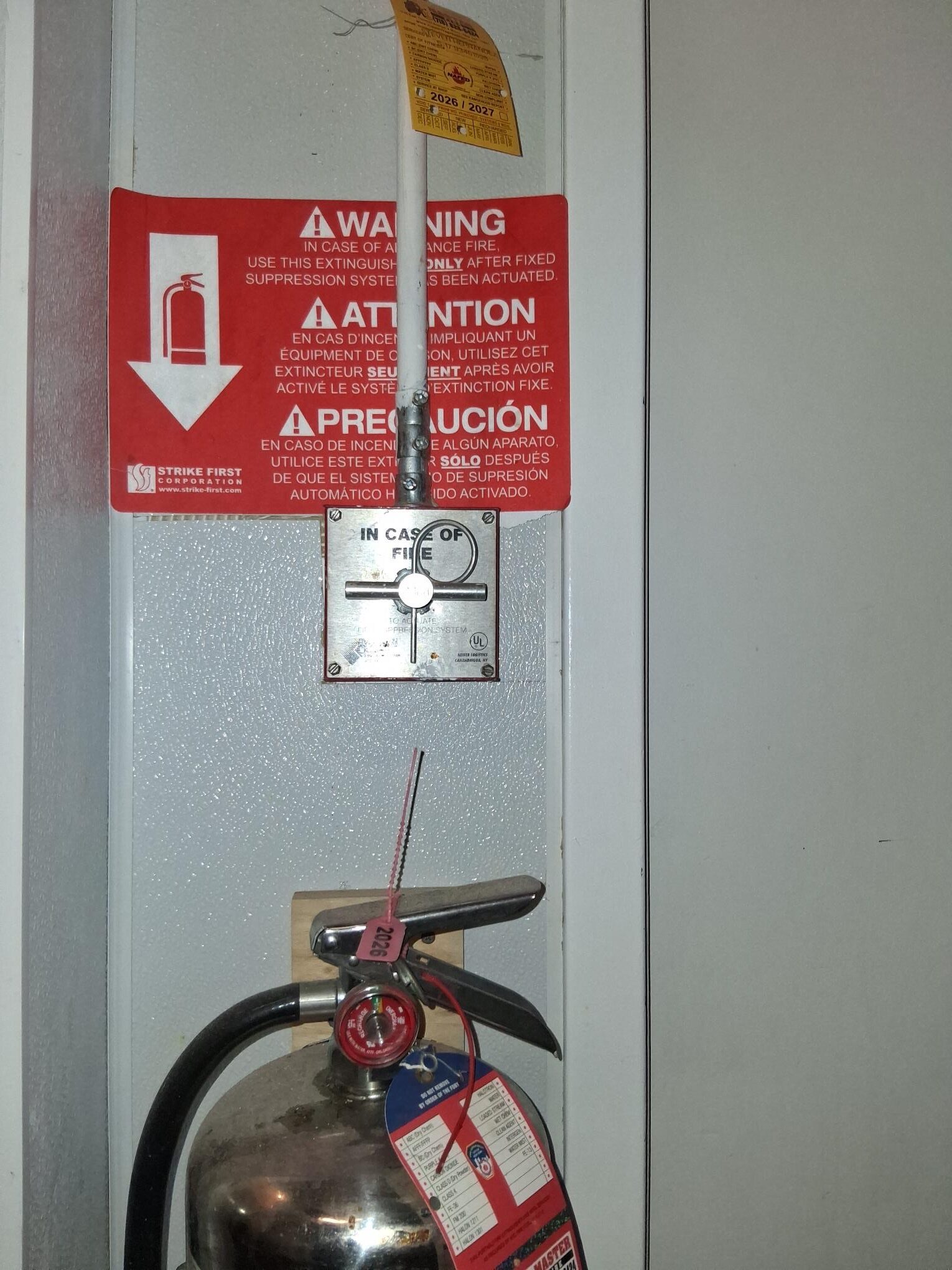
Master Fire Prevention reviewed the cooking line and the visible components of the wet-chemical fire suppression system. The inspection included appliance protection, nozzle placement, piping, the manual pull station, detection components, system condition, and the relationship between the installed cooking equipment and the protected hazards.
The review identified several items that needed attention before the kitchen entered full daily service. Rather than allowing those issues to remain unnoticed until an inspection or emergency, the facility could address them during a planned maintenance period.
Unlike a restaurant that can sometimes schedule service between meal periods or after closing, a school dining program may have tightly controlled building access and limited opportunities for kitchen shutdowns. The facilities staff therefore coordinated the suppression work with other cafeteria maintenance so technicians could complete the necessary service without interfering with student meal service.
After reviewing the system, the team addressed the service items and verified the applicable operating components. The facility also received updated service documentation so its staff could maintain a clearer record of the suppression system's condition and maintenance history.
The project illustrates why educational dining facilities benefit from proactive testing. A kitchen can continue producing meals every day while an appliance change, damaged component, service issue, or documentation problem develops in the background. Finding those conditions during planned testing gives administrators and facility managers an opportunity to correct them under controlled circumstances.
The result was a dining facility better prepared for the academic schedule, ongoing kitchen operations, and future fire-safety reviews. Just as important, the school had a clearer understanding of the relationship between its cooking equipment and its fire suppression protection.
For schools and colleges, suppression system maintenance is part of broader facilities management. Regular professional service helps protect students, faculty, food-service employees, buildings, equipment, and the continuity of campus dining operations.
Who tests school and college dining room fire suppression systems in Brooklyn? Master Fire Prevention provides professional commercial kitchen fire suppression testing, inspection, maintenance, and compliance support for schools, colleges, universities, academies, cafeterias, campus dining halls, and other institutional food-service facilities throughout Brooklyn.
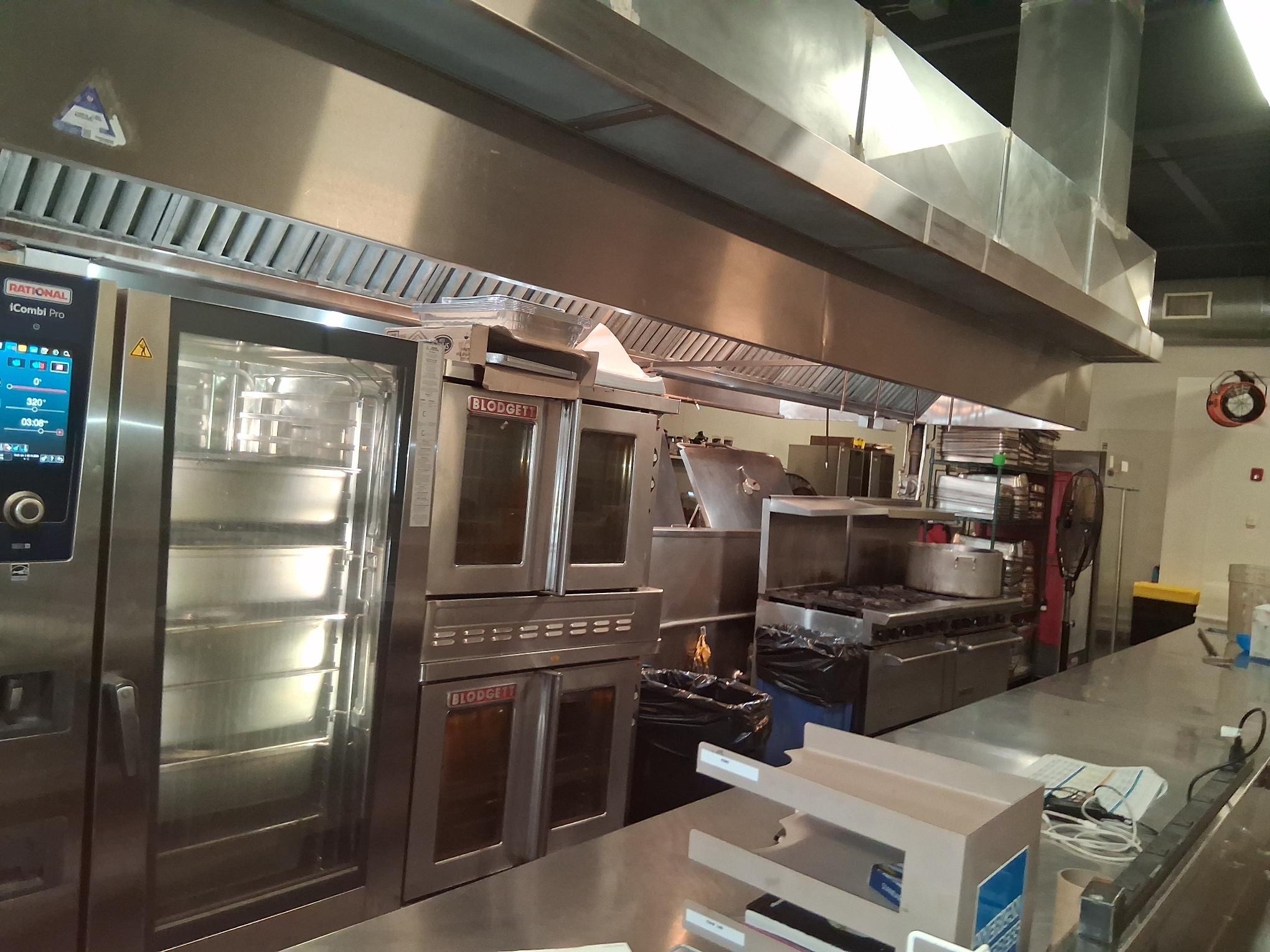
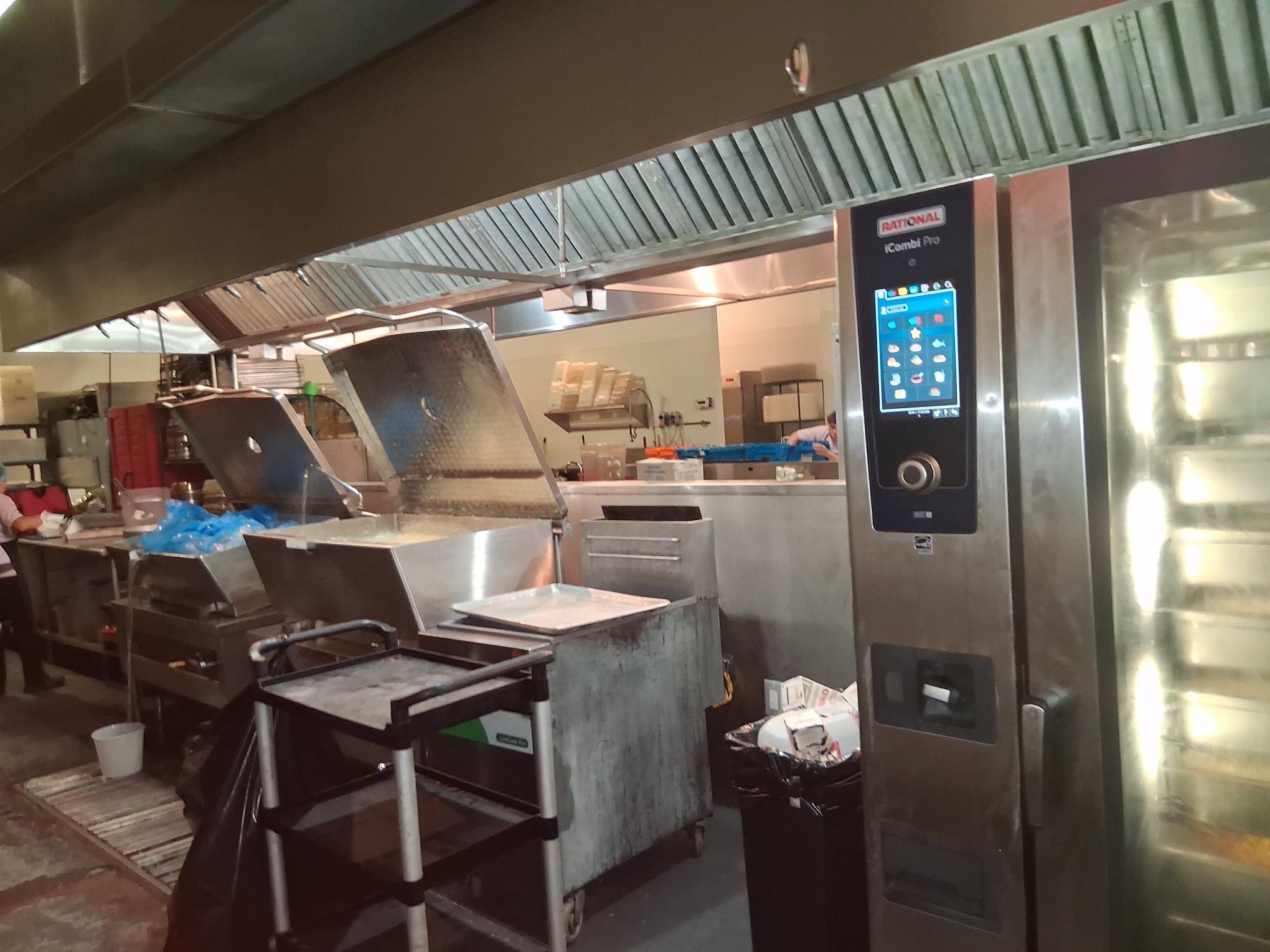
A school dining facility presents challenges that are different from those in many neighborhood restaurants. Kitchens may serve hundreds or thousands of meals during narrow service periods. Fryers, griddles, ranges, ovens, kettles, and other cooking appliances may operate at the same time. In addition, maintenance work often has to fit around classes, meal periods, summer programs, special events, and campus access rules.
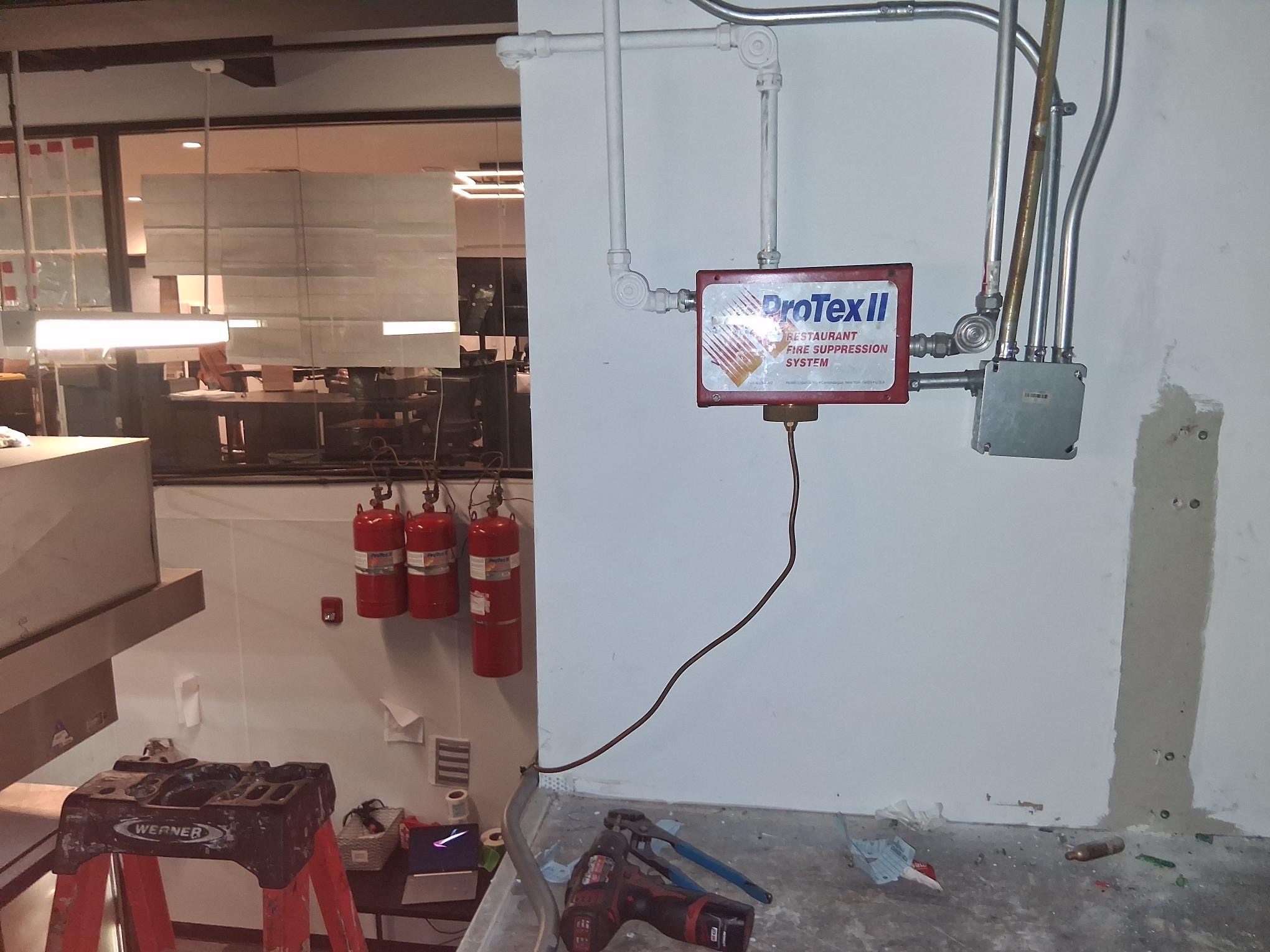
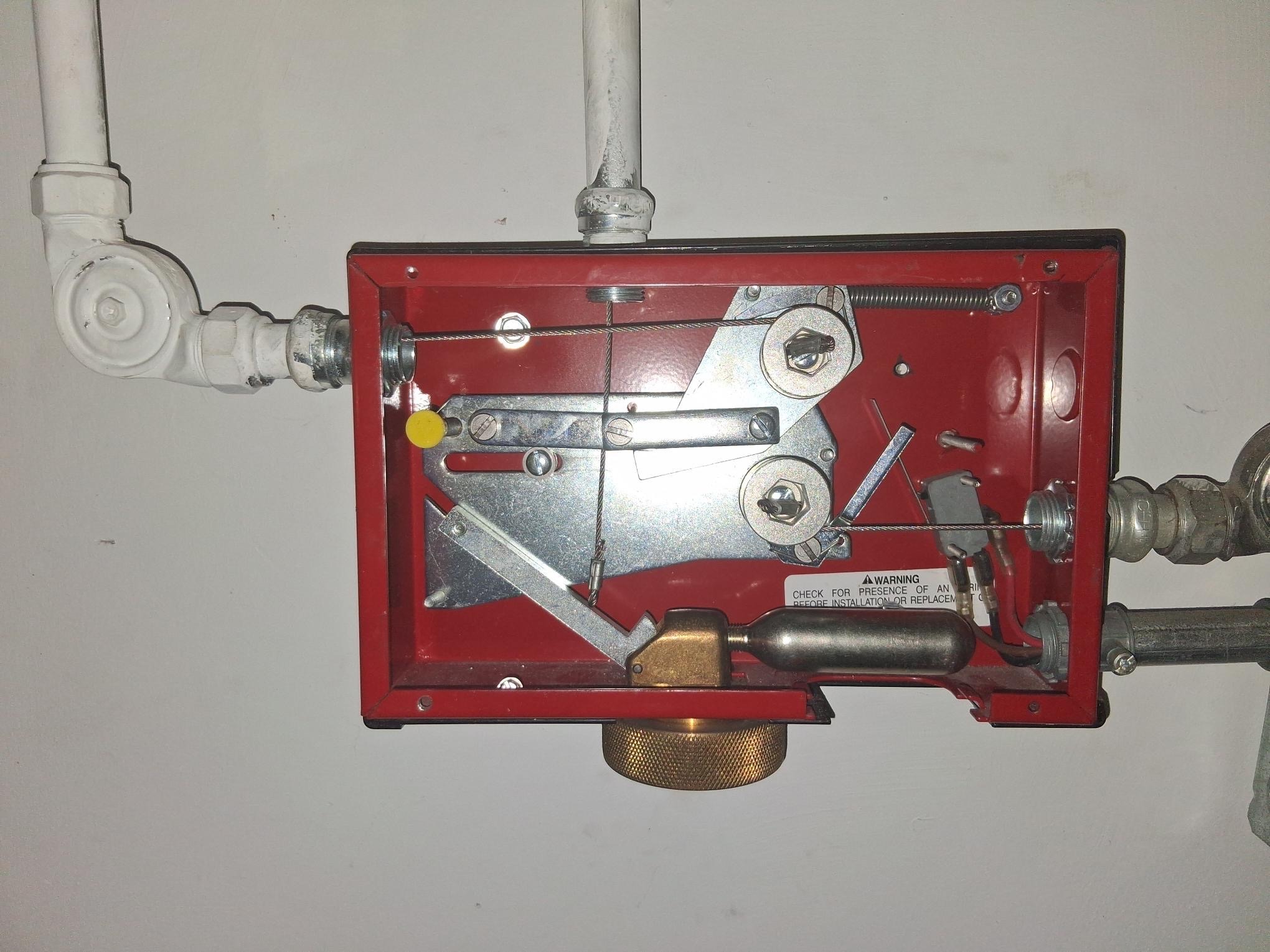
The kitchen suppression system therefore needs more than a quick look at an inspection tag. A professional service visit should address the protected cooking equipment, suppression nozzles, detection components, manual pull station, piping, control components, agent supply, and connected fuel or electrical shutoffs as applicable to the installed system.
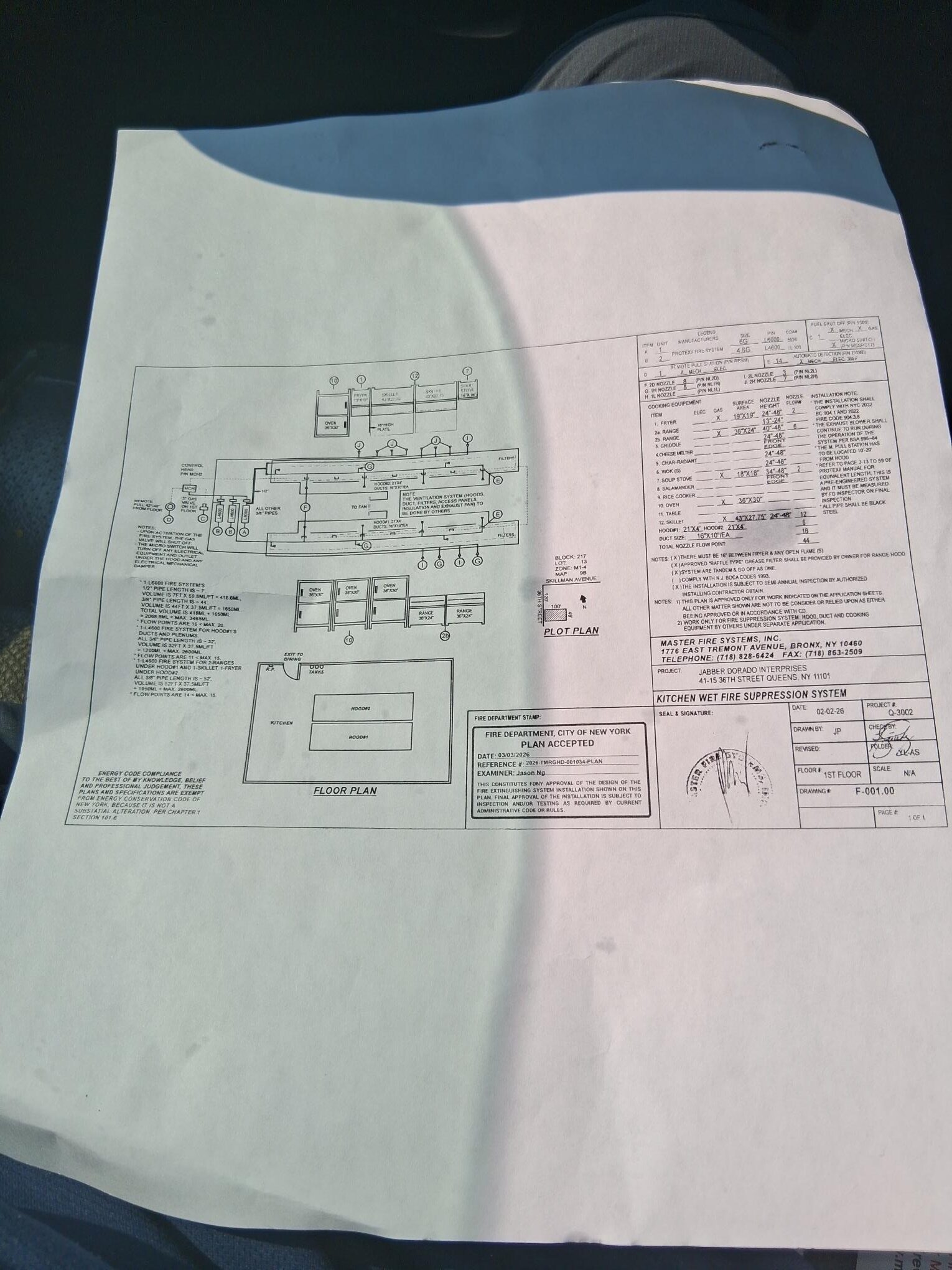
Institutional kitchens also change over time. A college may replace a fryer, relocate a griddle, redesign a serving station, or renovate part of the cooking line. Schools may inherit older equipment when contractors renovate a cafeteria. Consequently, the current appliance arrangement should remain consistent with the fire suppression protection designed for the cooking hazards.
Master Fire Prevention works with facility managers, school administrators, campus operations personnel, food-service managers, contractors, and property representatives. We can evaluate commercial cooking fire suppression equipment, perform required service and testing, document deficiencies, and identify repairs or additional corrective work when needed.
Regular service also helps facilities discover problems before they become larger operational issues. A damaged nozzle, contaminated detection component, inaccessible pull station, changed appliance layout, or missing service documentation may require attention even when the kitchen appears to operate normally.
For Brooklyn educational facilities, planning service before a major inspection, semester opening, kitchen renovation, or high-volume meal period can reduce unnecessary disruption. Master Fire Prevention serves Brooklyn from 41 Schermerhorn Street. Call (917) 341-4117 to discuss fire suppression testing for a school cafeteria, college dining hall, campus kitchen, or institutional food-service operation.
| Inspection Area | What Is Checked | Common Concern | Why It Matters |
|---|---|---|---|
| Cooking Appliance Coverage | Fryers, ranges, griddles and other protected cooking hazards | Equipment moved or replaced | Helps confirm the current cooking line matches suppression protection |
| Nozzles and Piping | Position, condition, caps and visible piping | Blocked, damaged or misaligned components | Supports proper agent distribution over protected hazards |
| Detection System | Detection components and release mechanism | Grease contamination, wear or damaged components | Supports automatic activation when required |
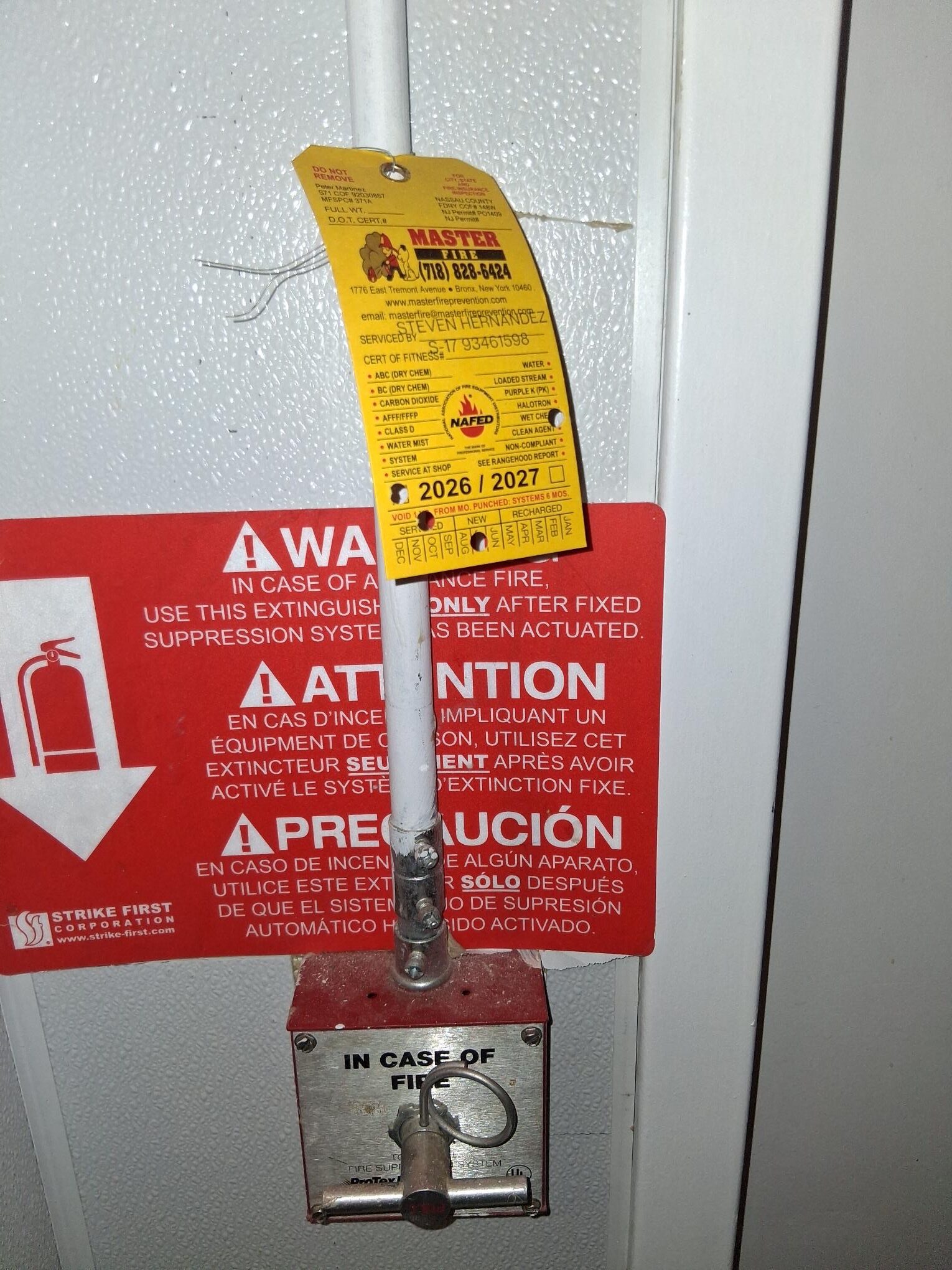
| Manual Pull Station | Accessibility and operating condition | Blocked access or damaged hardware | Provides a manual method of system activation |
| Agent and Control Components | Agent supply, cylinder and control equipment | Service condition, damage or previous discharge | Helps maintain an operational suppression system |
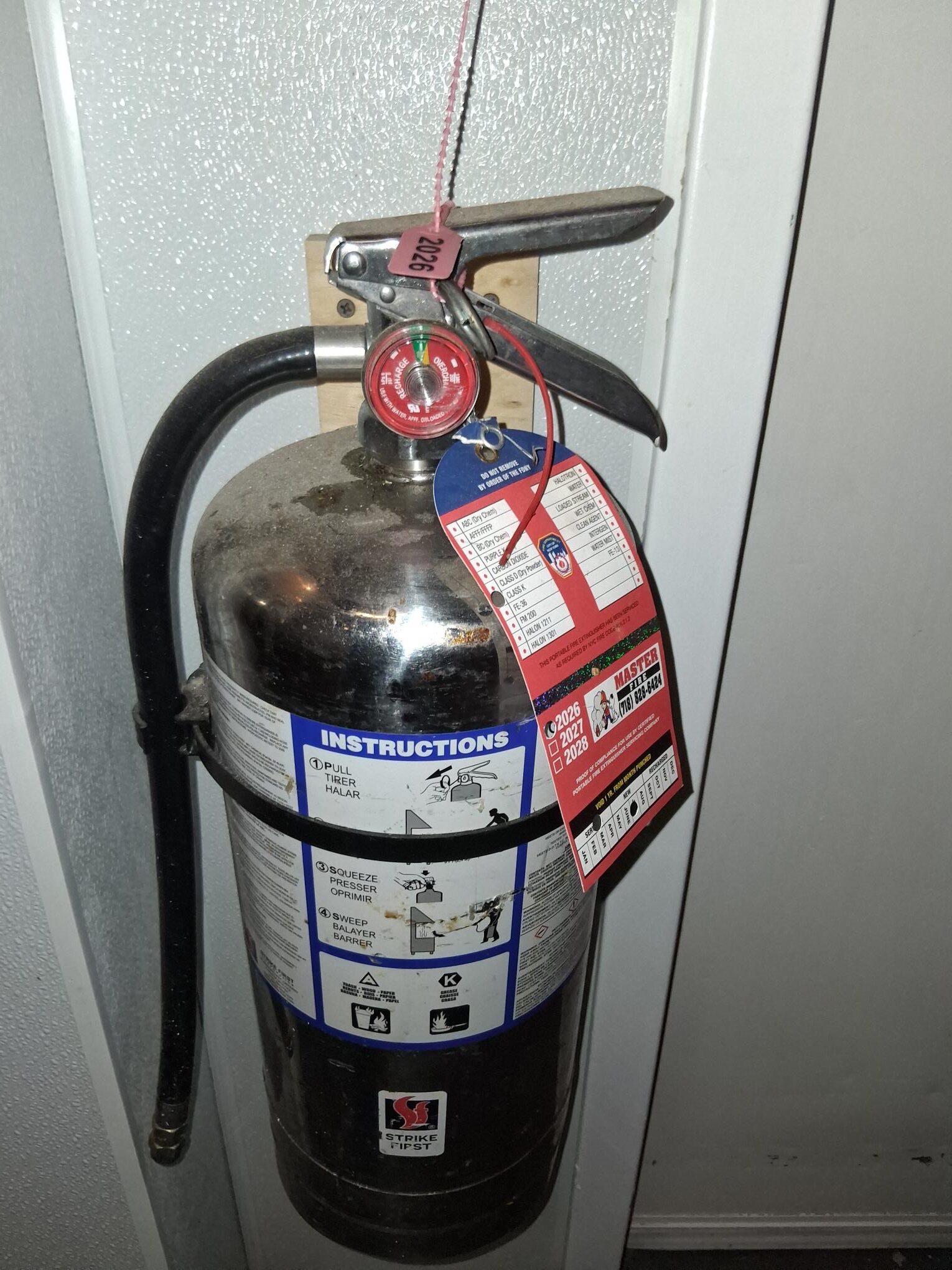
| Service Documentation | Inspection tags and maintenance records | Missing or outdated service information | Provides facilities staff with a documented maintenance history |
For more, see our guides to Brooklyn fire system pre-inspection services and commercial kitchen fire suppression testing in Brooklyn.
School and college dining rooms depend on commercial kitchens that must function safely day after day. A suppression system problem can affect more than a single meal period. It can disrupt cafeteria operations, create an urgent facilities issue, complicate an inspection, and force administrators to coordinate repairs while students and staff still need food service.
That is why scheduled fire suppression testing matters. Professional inspection gives facility managers an opportunity to identify damaged components, appliance changes, service deficiencies, or maintenance issues before they interfere with normal campus operations.
Master Fire Prevention provides suppression system testing and service for school cafeterias, college dining halls, academies, campus kitchens, and institutional food-service operations across Brooklyn. We work with facilities departments, administrators, food-service managers, contractors, and building representatives to coordinate service around the needs of the property.
Whether you are preparing for a new semester, planning summer maintenance, renovating a cafeteria, changing kitchen equipment, or reviewing an existing suppression system, our Brooklyn team can help determine what the system needs.
Call Master Fire Prevention at (917) 341-4117 to schedule fire suppression testing for a Brooklyn school or college dining facility. Our office is located at 41 Schermerhorn St, Brooklyn, NY 11201.
Master Fire Prevention ofrece inspección, pruebas, mantenimiento y servicio de sistemas de supresión de incendios para cafeterías escolares, comedores universitarios y cocinas institucionales en Brooklyn. Revisamos componentes del sistema, protección de los equipos de cocina, boquillas, detección, estaciones manuales y necesidades de mantenimiento. Para programar el servicio de un sistema de supresión de incendios en una escuela o universidad de Brooklyn, llame al (917) 341-4117.
No restaurant owner or property manager in New York City wants to risk failing an FDNY inspection, receiving violations, or operating with non-compliant fire systems. That’s why so many businesses rely on Master Fire Prevention Systems — trusted specialists in permitting, code compliance, and FDNY approvals for commercial kitchens — serving all of NYC, from Yonkers to the East Village, as well as Midtown and Downtown Brooklyn.
We understand how stressful it can be to deal with failed inspections, violation notices, emergency shutdowns, and outdated or non-compliant systems — especially when your business, staff, and customers are on the line. Our team works directly with restaurant owners, building managers, and contractors to correct issues quickly, bring systems up to code, properly document compliance, and ensure everything is ready for FDNY approval.
We serve restaurant owners, fast food locations, convenience stores, Bodegas and Delis, Venues, Nightclubs, Bars, municipal institutions, medical offices, industrial and manufacturing businesses throughout Brooklyn, including:
Brownsville, Downtown Brooklyn, Richmond Hill, Financial District, Borough Park, Park Slope, East New York, Bushwick, and more.
Master Fire Prevention Systems proudly serves all five boroughs including Manhattan
Queens: Long Island City
the Bronx, and Staten Island — providing full-service support for fire suppression permitting, hood and duct compliance, ventilation approvals, sprinkler coordination, inspections, testing, maintenance, and violation removal. Every project is handled with a focus on passing inspections, securing approvals, and keeping your property legally operational.
Whether you’re opening a new restaurant, upgrading an existing commercial kitchen, responding to a failed FDNY inspection, or taking over a previously closed space, Master Fire Prevention Systems manages the entire compliance process — from plans and permits to final certification and sign-off.
Stay informed and inspection-ready:
Subscribe to our YouTube channel for short, practical fire safety and compliance videos, read our blog (updated weekly with real NYC field insights), and follow us on Instagram for behind-the-scenes service work and compliance tips.
Service areas also include Harlem, Spanish Harlem, Lower Manhattan, Upper Manhattan, Inwood, and all NYC boroughs — Brooklyn, Queens, Staten Island, the Bronx, and Manhattan.